Car Sounds to Watch Out for When Taking a Used Car on a Set Drive: The Ultimate Buyer’s Guide

Buying a pre-owned vehicle is an exciting milestone, but it requires a keen ear and a sharp eye. When you get behind the wheel, you aren’t just checking the comfort of the seats; you are listening for the health of the engine, transmission, and suspension. Understanding the Car Sounds to Watch Out for When Taking a Used Car on a Test Drive can be the difference between a reliable daily driver and a financial nightmare.
In the Kenyan market, where road conditions vary from smooth tarmac to rugged murram, mechanical wear happens in specific ways. Whether you are browsing The Best Secondhand Cars To Buy in Nairobi or looking for a rugged cruiser, your ears are your best diagnostic tool.
Why Your Ears Are Better Than a Computer During a Test Drive
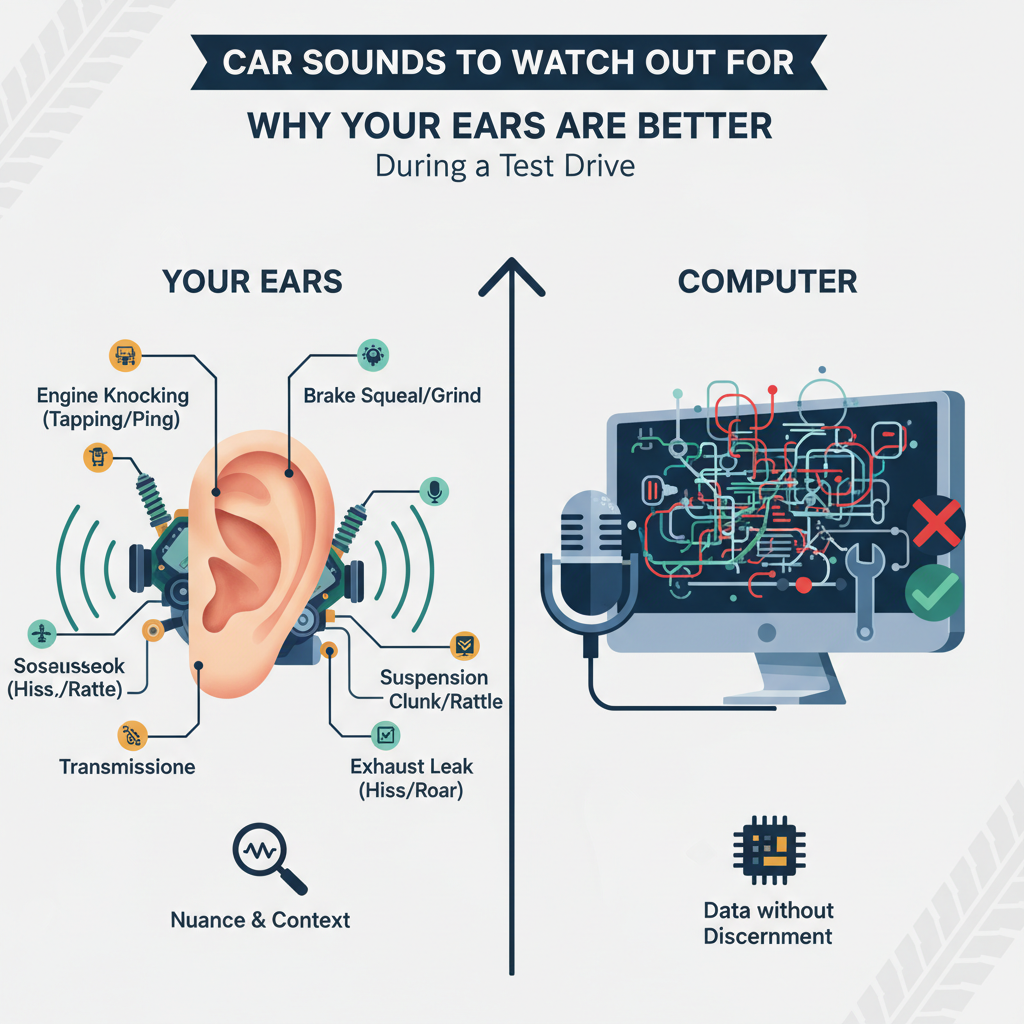
Modern cars have onboard diagnostics (OBD), but many mechanical failures don’t trigger a “Check Engine” light until it is too late. During a test drive, you are experiencing the car in its natural environment.
Noise is often the first symptom of friction, misalignment, or fluid loss. By identifying these Car Sounds to Watch Out for When Taking a Used Car on a Test Drive, you can negotiate a better price or walk away from a bad deal entirely. This skill is especially important when considering How to Inspect a Second-Hand Car Before Buying (Mechanic Checklist) to ensure nothing is missed.
1. High-Pitched Squealing or Chirping Under the Hood
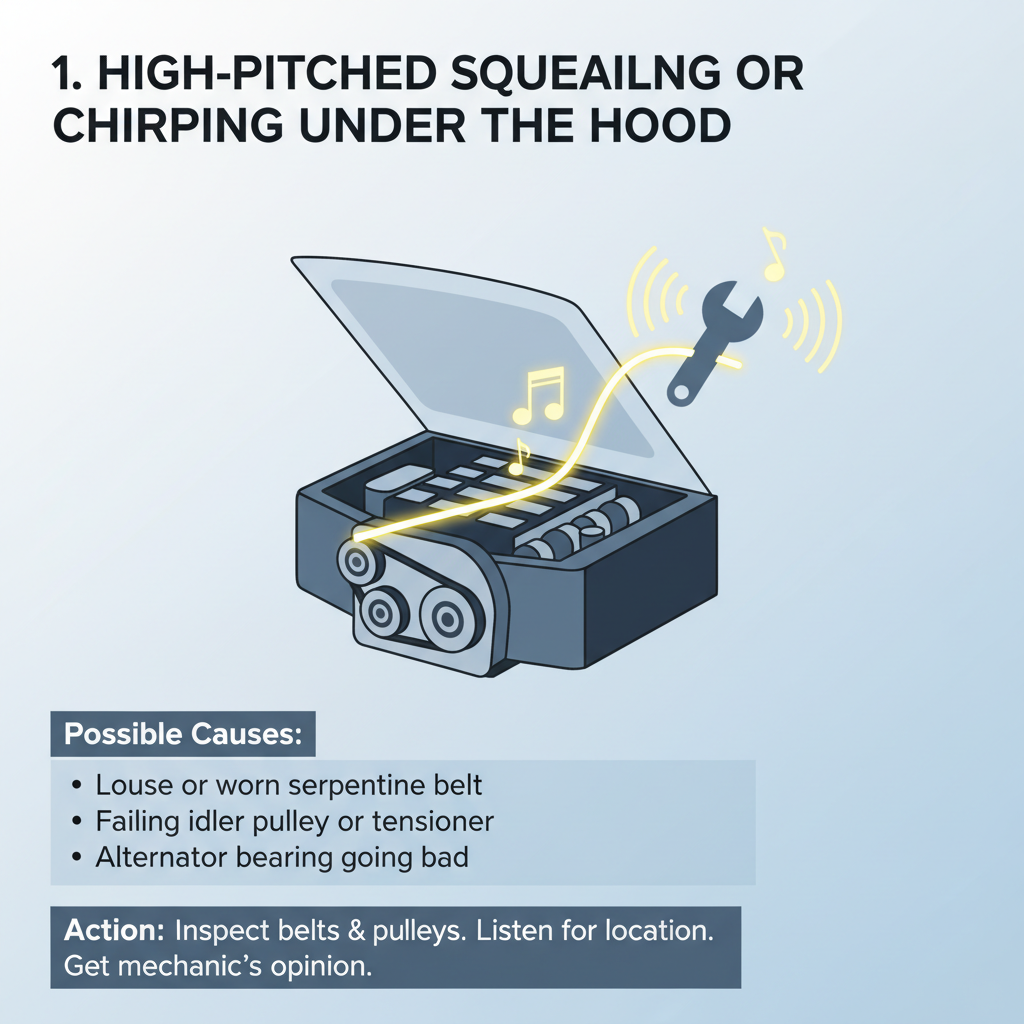
One of the most common noises you might encounter is a high-pitched squeal, especially when you first start the car or when you accelerate. This usually indicates a worn-out serpentine belt or a loose fan belt.
If the chirping is constant, it might be a failing pulley bearing. While often a cheap fix, it can lead to the car stalling if the belt snaps. Always check the belt’s condition for cracks or glazing after you hear this sound.
2. Grinding Noises When Braking
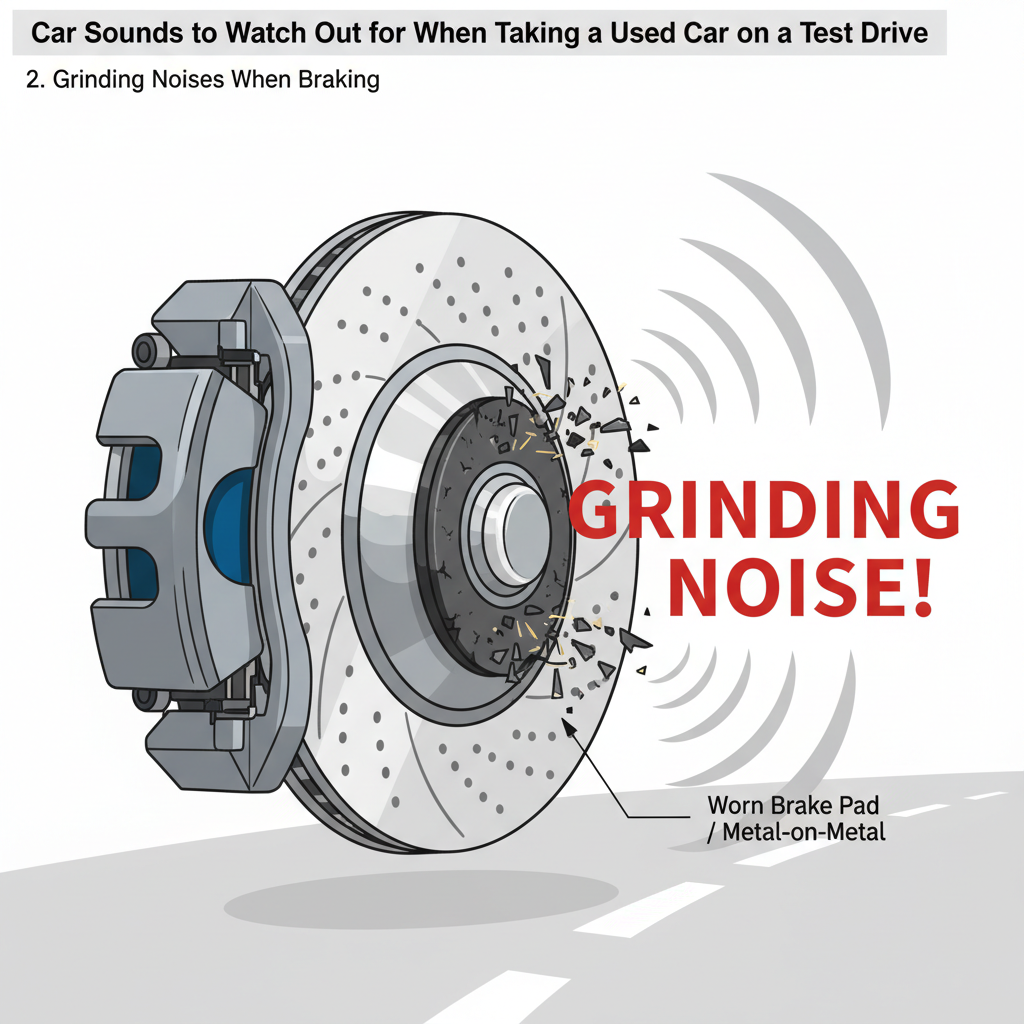
If you hear a harsh, metallic grinding sound when applying the brakes, the brake pads are likely completely worn down. This means the metal backing plate is rubbing directly against the brake rotor, which can cause permanent damage to the braking system.
Brakes are a non-negotiable safety feature. If you hear this, you should factor the cost of new pads and rotors into your negotiation. This is one of the most critical Car Sounds to Watch Out for When Taking a Used Car on a Test Drive because it affects your immediate safety on the road.
3. Clunking or Knocking Over Bumps
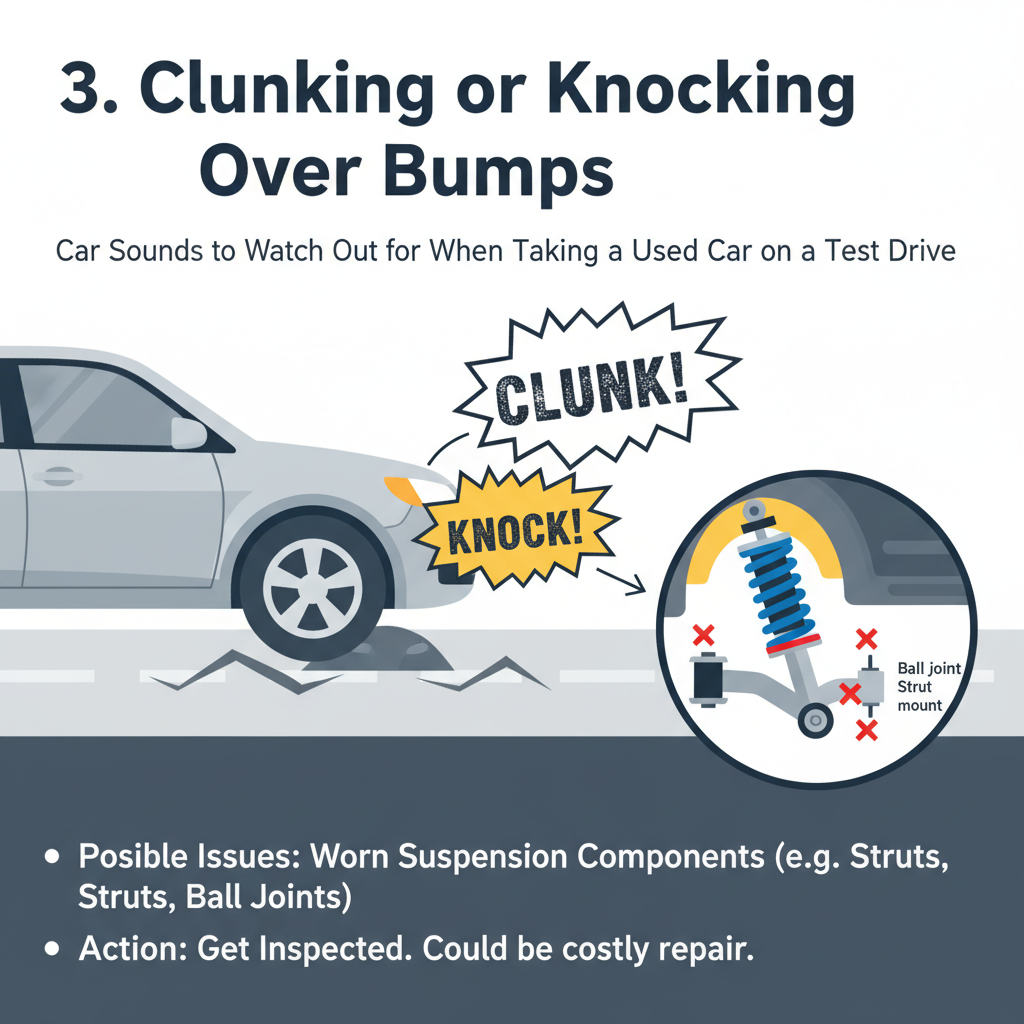
Nairobi’s potholes are the ultimate test for a car’s suspension. If you hear a “clunk” or a “thud” when driving over speed bumps or uneven surfaces, the car likely has worn-out: Control arm bushings Ball joints Shock absorbers or struts Sway bar links
Suspension repairs can become costly if multiple components are failing. Knowing How Much Should You Negotiate on a Used Car in Kenya? (Real Price Ranges) becomes vital if you detect these suspension issues early on.
4. Clicking Sounds While Turning
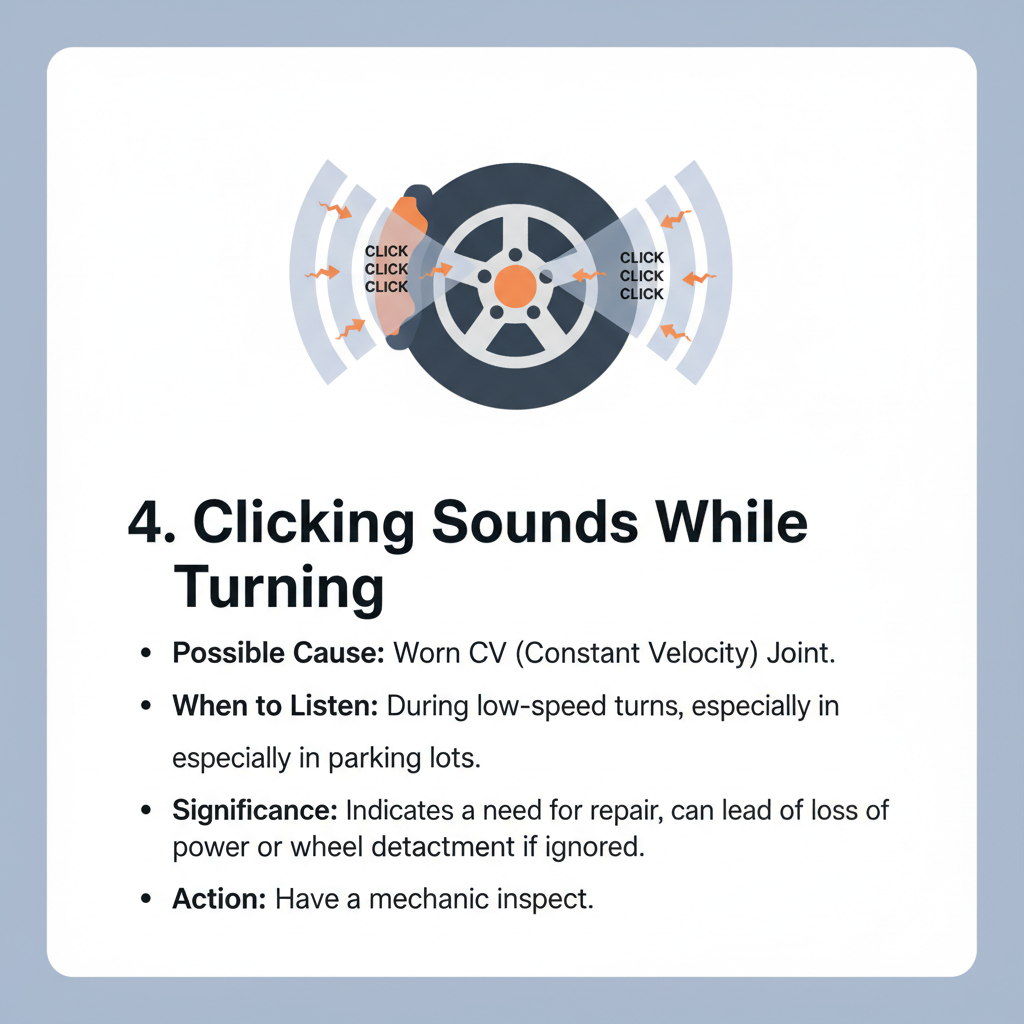
If you hear a rhythmic “click-click-click” specifically when you are making sharp turns at low speeds, the Constant Velocity (CV) joints are likely failing.
The CV joint is protected by a rubber boot. If that boot tears, grease escapes, and dirt enters, leading to the clicking sound. If left unaddressed, the axle can snap, leaving you stranded. This is a common issue for front-wheel-drive vehicles used in urban environments.
5. A Deep Rumbled or Roar While Driving
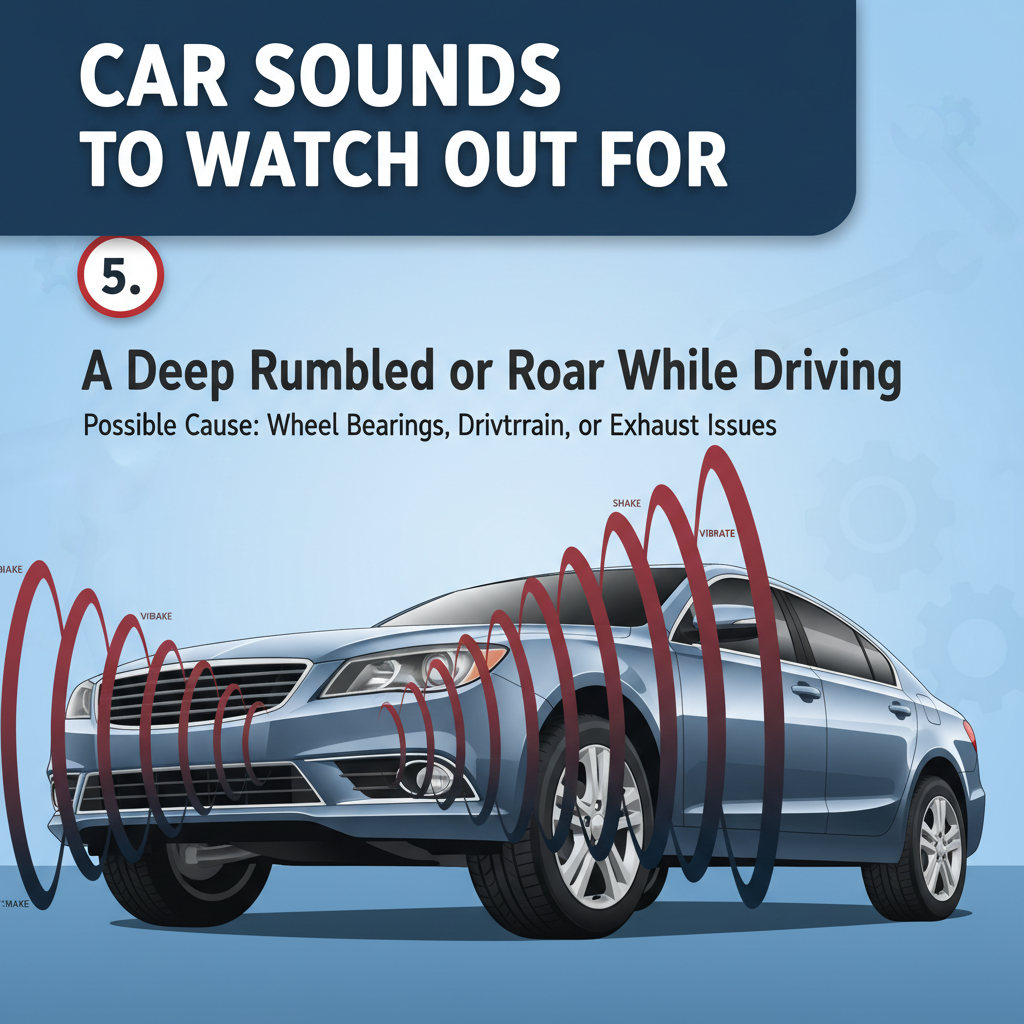
Does the car sound like a jet engine taking off as you increase your speed? If the noise gets louder the faster you go—regardless of engine RPM—you are likely dealing with a bad wheel bearing.
To confirm this, safely and slightly veer the car left and right on an empty road. If the pitch of the roar changes as the weight shifts, it’s almost certainly a wheel bearing. This is a vital part of the Car Sounds to Watch Out for When Taking a Used Car on a Test Drive checklist.
6. Hissing Noises Under the Bonnet
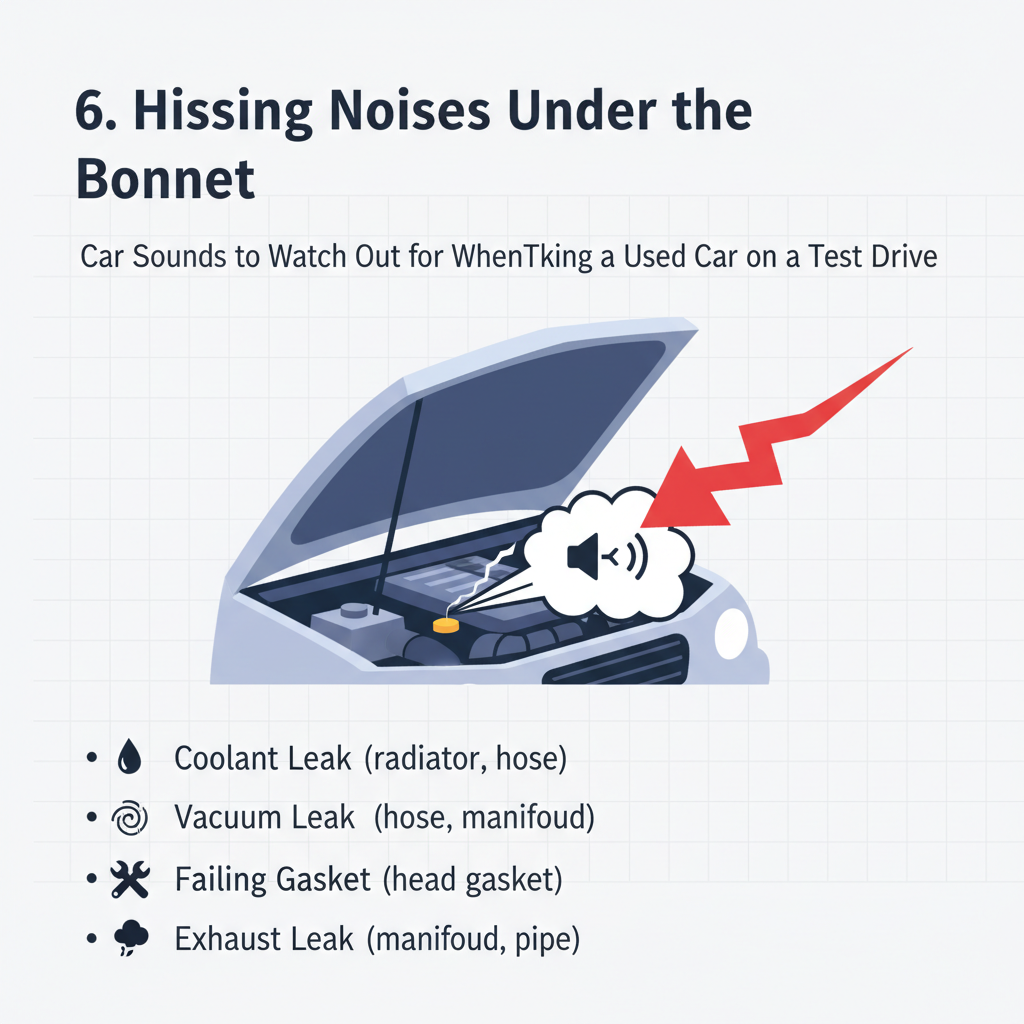
A hissing sound usually indicates a leak. This could be:
- Coolant Leak: If the hiss is accompanied by a sweet smell (like maple syrup) and steam, the cooling system is leaking.
- Vacuum Leak: A constant hiss while the engine is idling might indicate a vacuum hose has perished or disconnected.
Overheating is a leading cause of engine failure in Kenya. If the car is hissing, proceed with extreme caution. You might want to compare how different brands handle heat; for instance, see Toyota vs Nissan vs Mazda: Which Japanese Brand Lasts Longest in Kenya? to understand brand-specific reliability.
7. Tapping or Clicking from the Engine (Valvetrain)
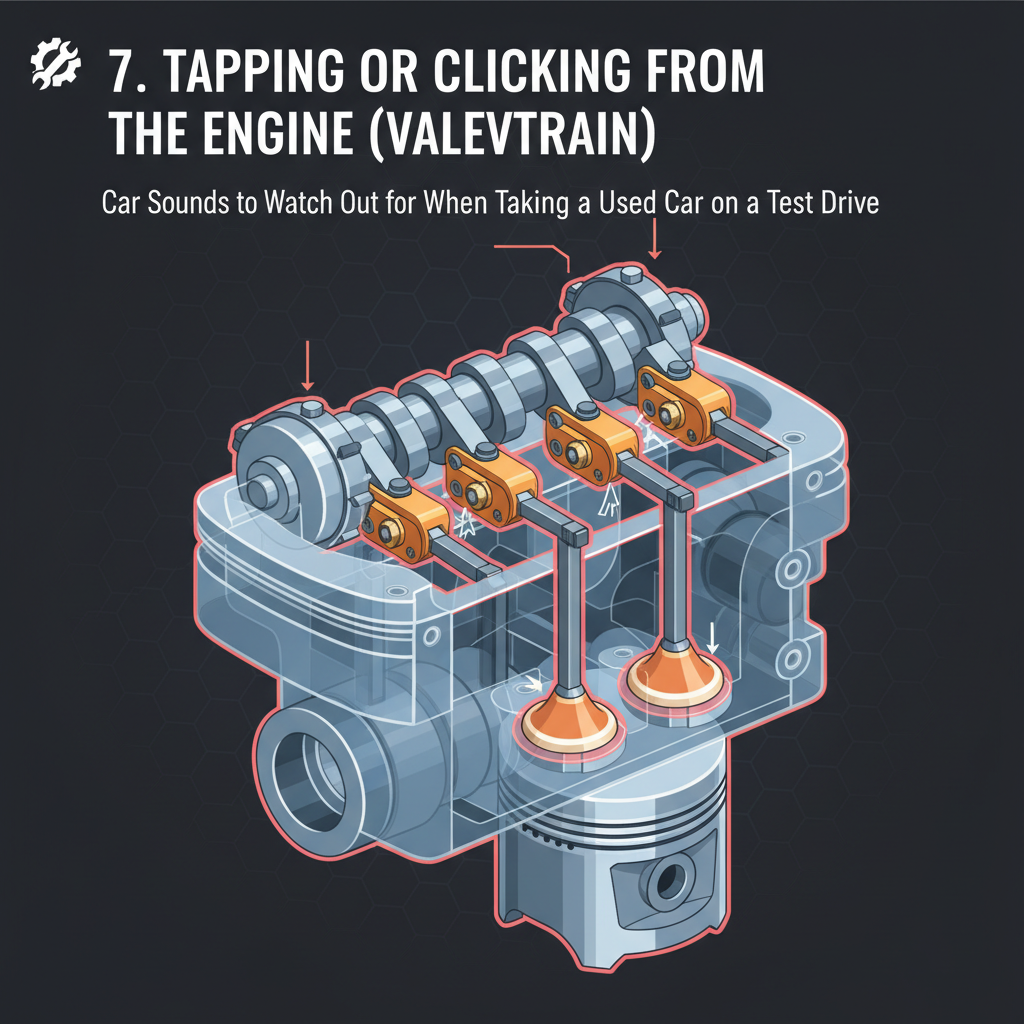
A light tapping or “ticking” sound that speeds up as you rev the engine usually points to low oil pressure or worn valvetrain components. While some engines (like certain older Nissans) have naturally noisy injectors, a loud metallic tick is a red flag.
It could mean the previous owner neglected oil changes, leading to sludge buildup. This is a significant concern if you are wondering It Worth Buying a Car with Over 200,000 KM in Kenya?, as high-mileage engines are more prone to these internal wear-and-tear sounds.
8. Whining or Howling from the Transmission
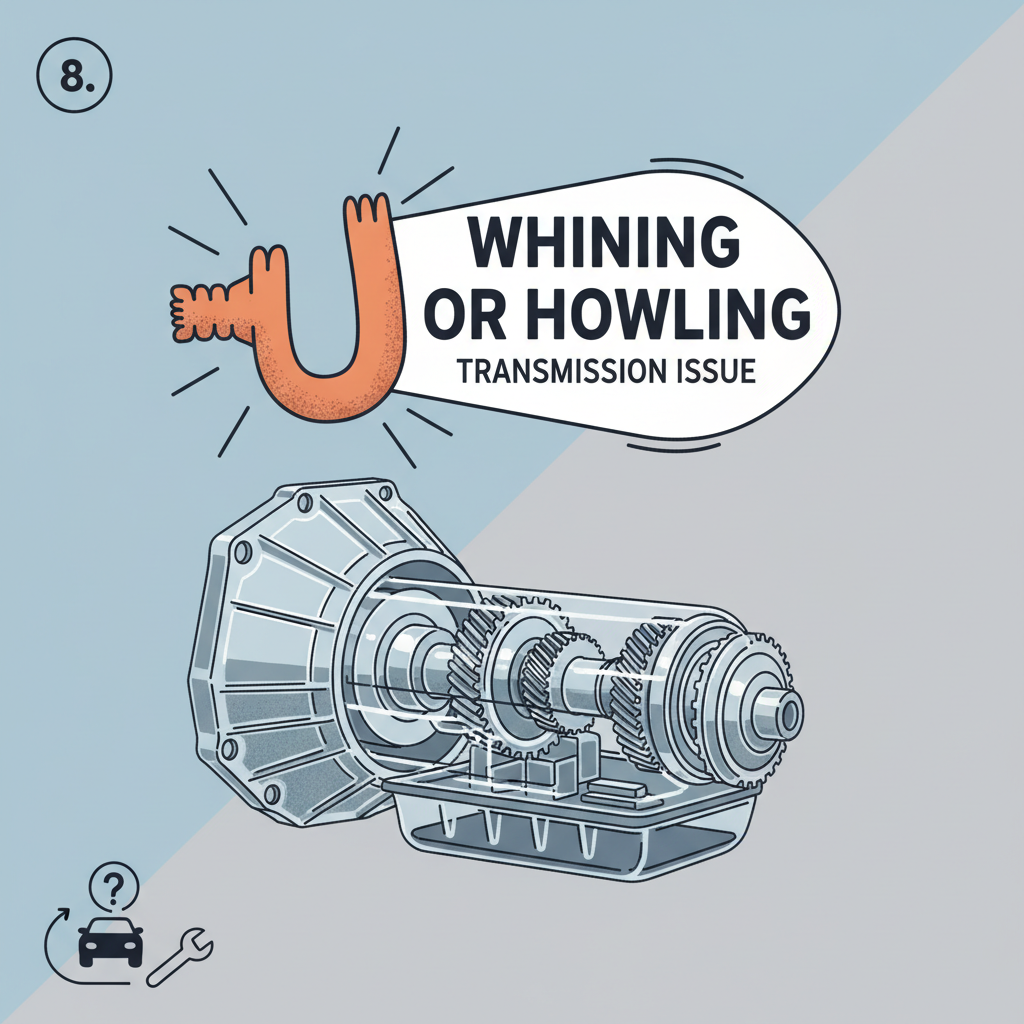
When analyzing Car Sounds to Watch Out for When Taking a Used Car on a Test Drive, pay close attention to the transmission. A high-pitched whine when you shift gears or accelerate can indicate: Low transmission fluid Worn gears * A failing torque converter
If the car is an automatic and it hesitates or “hunts” for gears while whining, the transmission may be on its last legs. Replacing a gearbox is one of the most expensive repairs you can face.
9. Exhaust Roar or Rattling
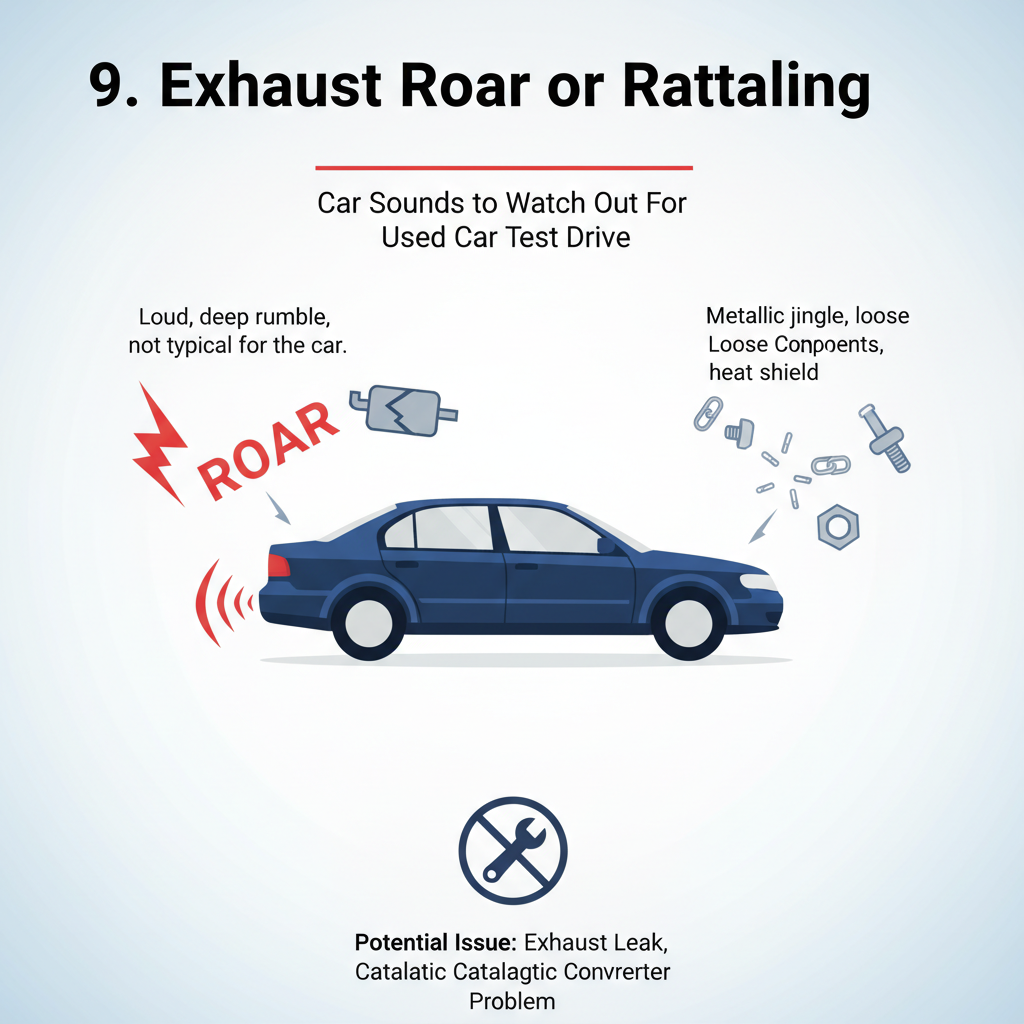
A loud, throaty roar coming from underneath the car usually means there is a hole in the exhaust pipe or the muffler has rusted through. While some people like a loud car, an exhaust leak can allow dangerous carbon monoxide to enter the cabin.
If you hear a metallic rattle, it might be a loose heat shield or a failing catalytic converter. Catalytic converters are expensive to replace, so ensure this isn’t the source of the noise.
How to Conduct the “Silent” Test Drive
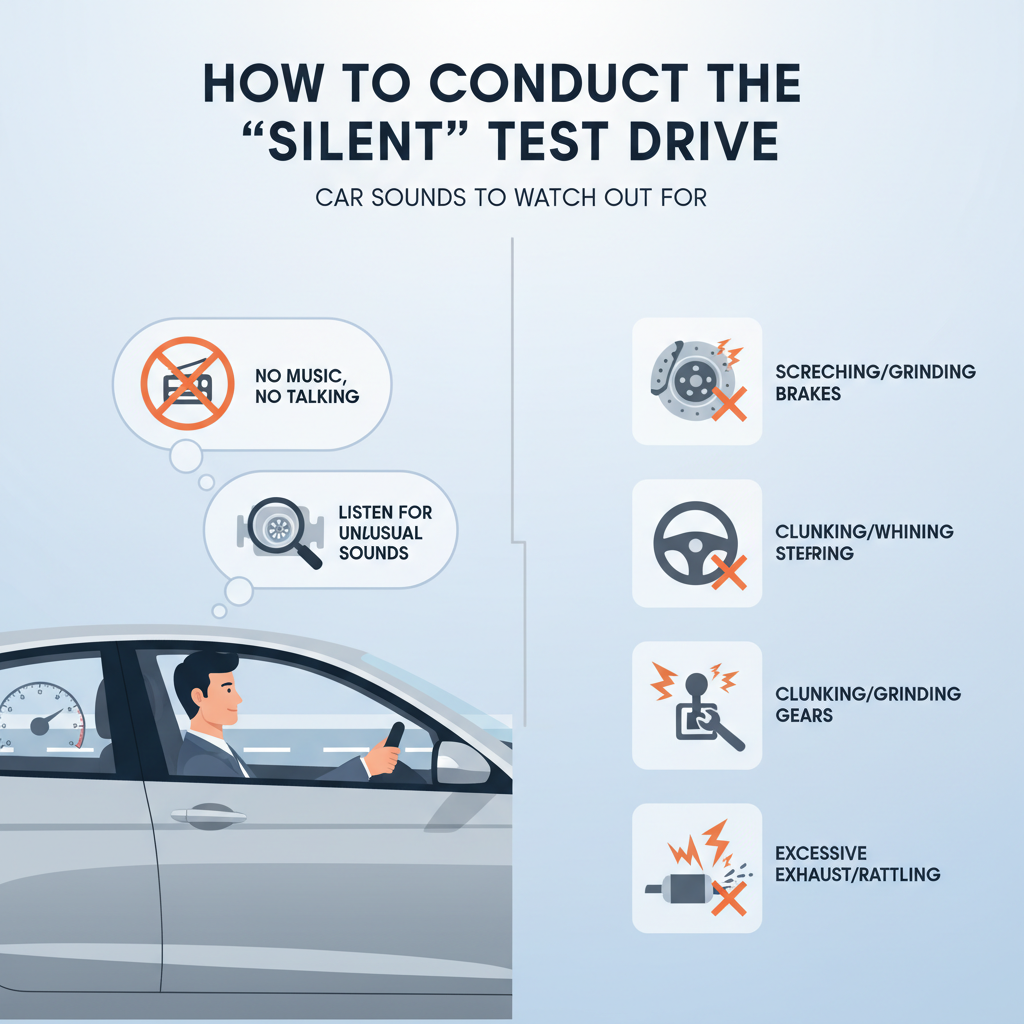
To effectively listen for these sounds, you must follow a specific protocol:
- Turn off the Radio: This seems obvious, but many sellers will turn on the music to mask subtle noises.
- Close the Windows First: Listen for wind noise and interior rattles.
- Open the Windows: Drive near a wall or in a quiet alley. The sound reflecting off the wall will help you hear “external” noises like clicking CV joints or squealing brakes.
- Drive on Different Surfaces: Go from smooth pavement to a slightly rougher road to test the suspension.
When looking for the Best Family Cars Under KSh 1 Million in Kenya (2026), remember that a quiet cabin is often a sign of a well-maintained vehicle.
Red Flags: When to Walk Away
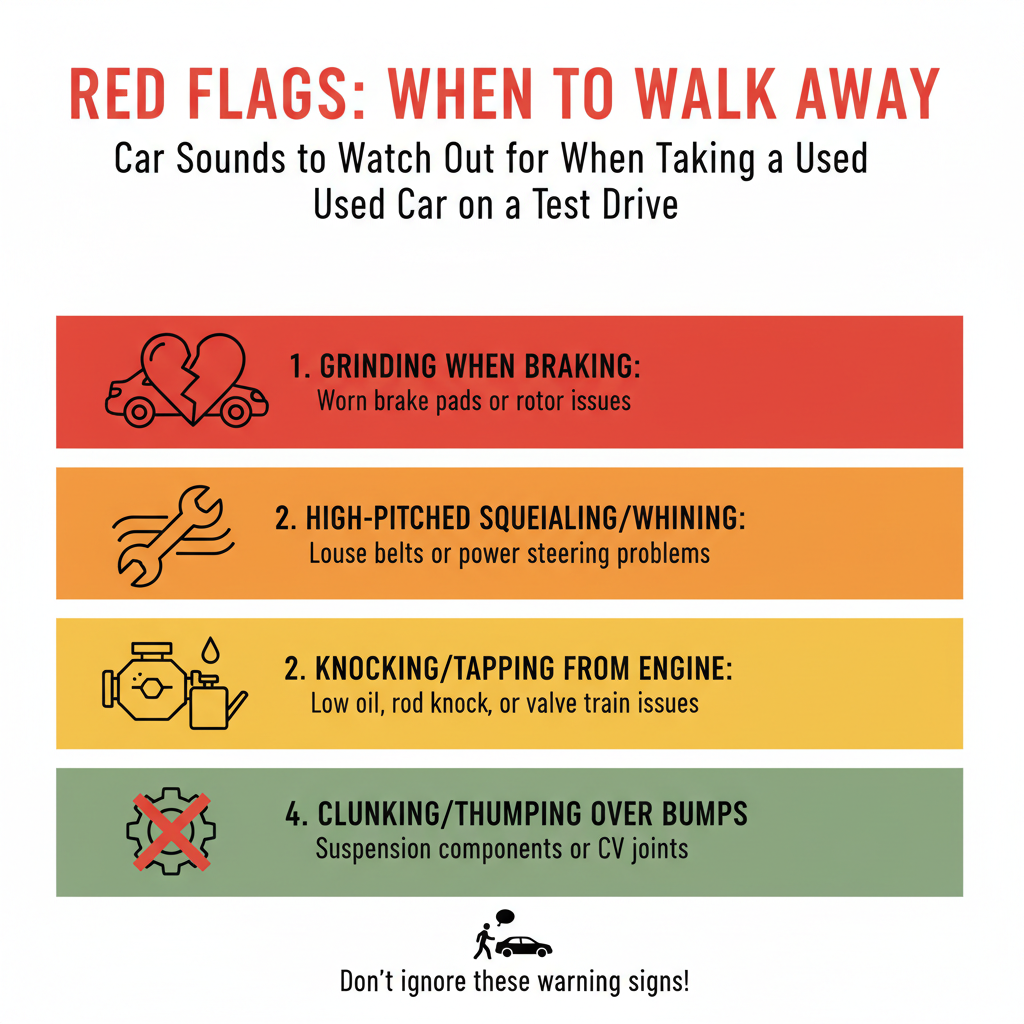
Not every noise is a dealbreaker. A squeaky belt is a minor fix. However, if you hear heavy engine knocking (a deep “thudding” inside the engine block) or severe transmission grinding, it is time to walk away.
These issues point to fundamental mechanical failure. Don’t let a “good deal” blind you to the reality of expensive repairs. This is one of the Common Mistakes First-Time Car Buyers Make in Nairobi that can be easily avoided by staying clinical and objective during the test drive.
Summary Checklist for your Test Drive
| Sound | Potential Issue | Severity | | :— | :— | :— | | High-pitched squeal | Serpentine Belt | Low/Medium | | Metallic Grinding (Braking) | Brake Pads/Rotors | High (Safety) | | Clicking while turning | CV Joints | Medium/High | | Deep Roar/Hum | Wheel Bearings | Medium | | Rhythmic Ticking | Engine Valves/Oil | High | | Hissing | Cooling System Leak | High |
FAQ: Common Questions About Used Car Noises
Q1: Is a little bit of engine noise normal in a used car? A: Yes, all engines make some noise. However, it should be a consistent, smooth “purr.” Any “rhythm” that sounds like metal hitting metal or sharp clicking is usually a sign of trouble.
Q2: What if the car makes a noise only when it’s cold? A: This often points to “piston slap” or a failing belt. While some cars operate fine once warmed up, a noise that disappears when hot can still indicate significant internal wear that will eventually require attention.
Q3: Can I trust a seller who says “it just needs a small adjustment”? A: Rarely. If it were a small, cheap adjustment, the seller would likely have fixed it to increase the car’s value. Always assume the worst-case scenario for any mystery noise.
Q4: Does a loud exhaust affect the car’s performance? A: Yes. An exhaust leak can lead to reduced fuel efficiency and poor engine backpressure, which impacts acceleration. It also prevents the car from passing certain inspections.
Q5: Should I bring a mechanic to the test drive? A: Absolutely. While you can identify many Car Sounds to Watch Out for When Taking a Used Car on a Test Drive, a professional mechanic has the experience to differentiate between a minor rattle and a catastrophic failure.
Final Thoughts
A test drive is your best opportunity to vet a vehicle. By staying quiet and focusing on the sounds the car makes, you protect your investment and your safety. Whether you are looking at Imported Vs Locally Used Cars in Kenya: Which One Should You Buy? or a budget-friendly option, your ears are your most valuable asset. Happy hunting, and drive safe!