
Is It Worth Buying a Car with Over 200,000 KM in Kenya? A Comprehensive Guide
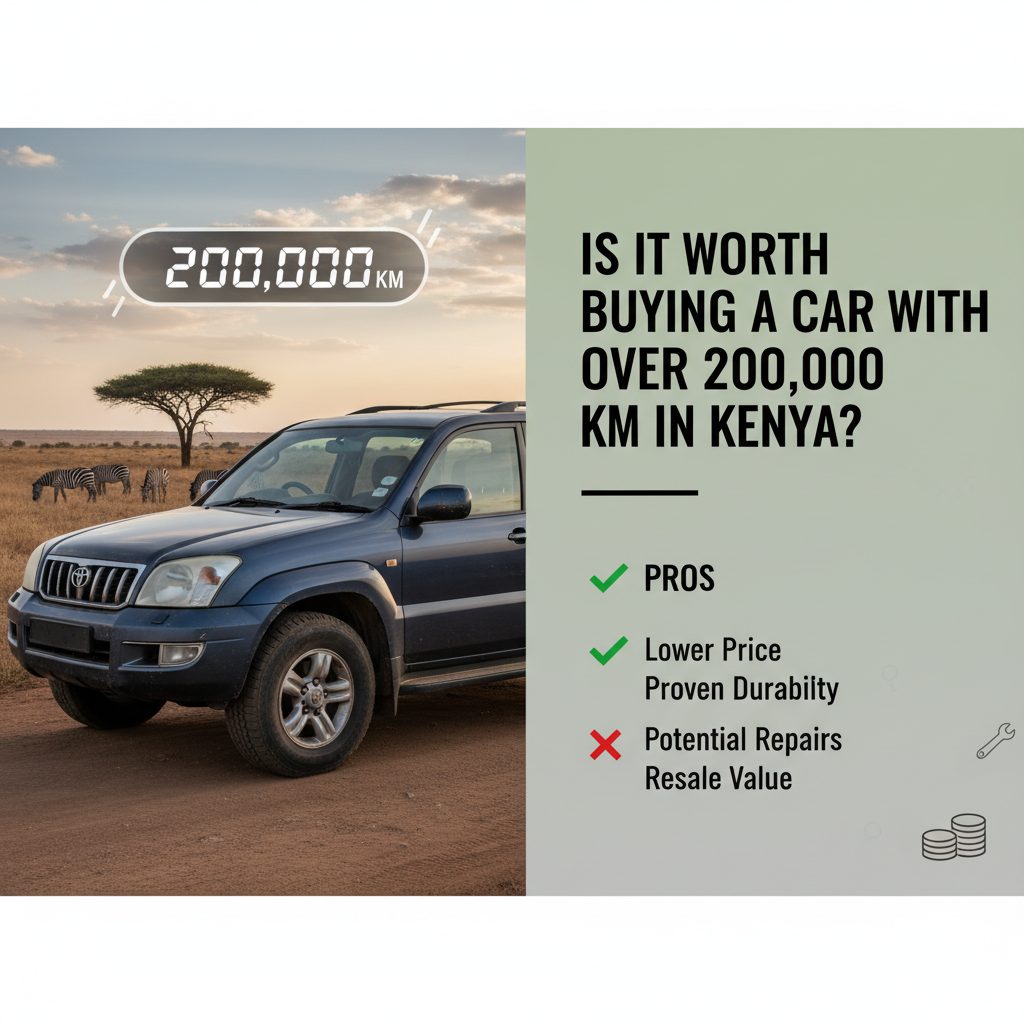
In the vibrant Kenyan automotive market, the allure of owning a vehicle often clashes with the reality of high import taxes and rising dealership prices. For many Kenyans, the second-hand market—specifically “locally used” cars—is the most viable path to car ownership. However, this path often leads to a common dilemma: is it worth buying a car with over 200,000 KM in Kenya?
When a digital odometer crosses the 200,000-kilometer mark, it often triggers a psychological red flag for buyers. In many western markets, such a car might be headed for the scrap heap. But in Kenya, where Toyotas and Isuzus are known to run for decades, the answer isn’t a simple yes or no.
This guide explores the mechanical, financial, and practical realities of high-mileage cars to help you make an informed decision.
Understanding the 200,000 KM Milestone in the Kenyan Context
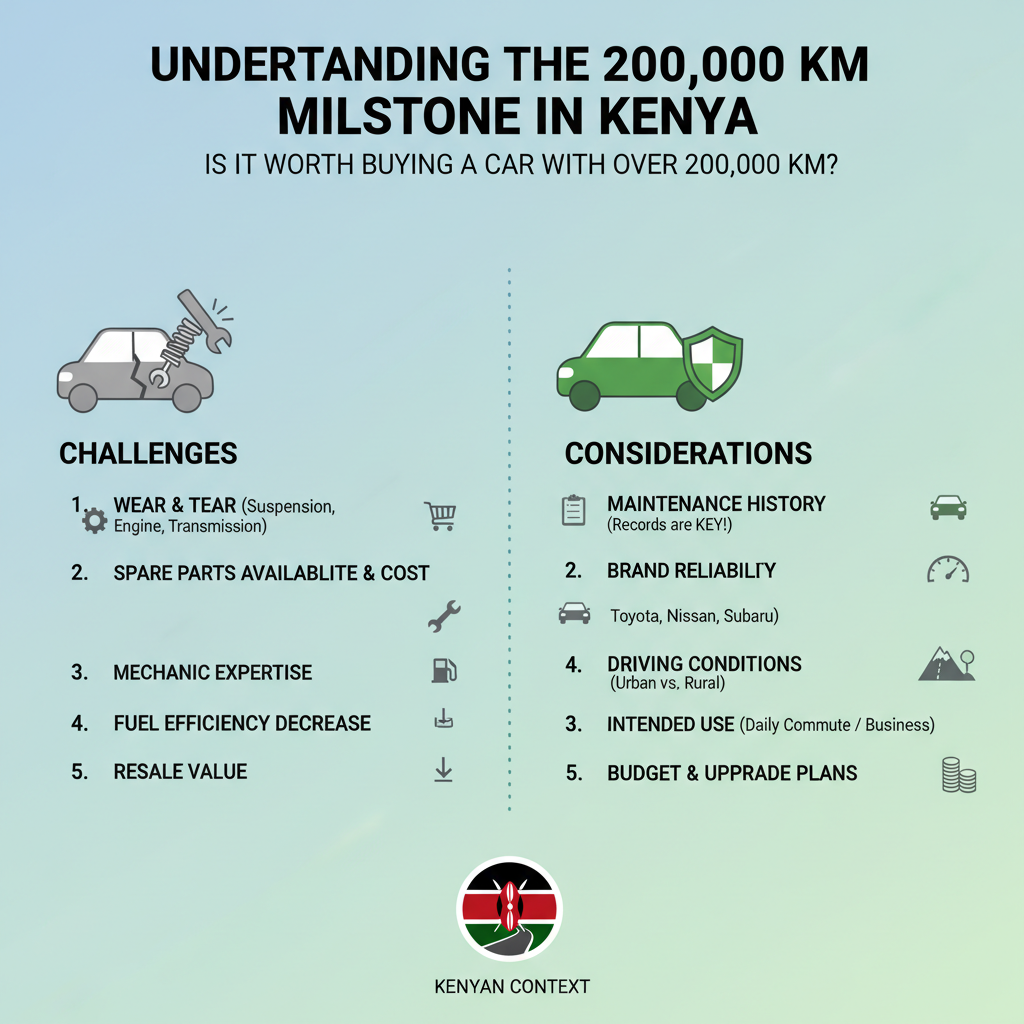
In Kenya, the average driver covers between 10,000 and 15,000 kilometers per year. A car with 200,000 KM is likely between 13 and 18 years old. While this sounds ancient, the “gray import” market means many cars enter Kenya already having served 5 to 7 years in Japan or the UK.
Why Miles Matter (And Why They Don’t)
Mileage is a measure of wear and tear, but it is not the only measure. A car that has covered 200,000 KM on smooth tarmac highways between Nairobi and Mombasa might be in better mechanical shape than a car with 100,000 KM driven exclusively on the rough, potholed feeder roads of rural counties.
The Pros of Buying a High-Mileage Car in Kenya
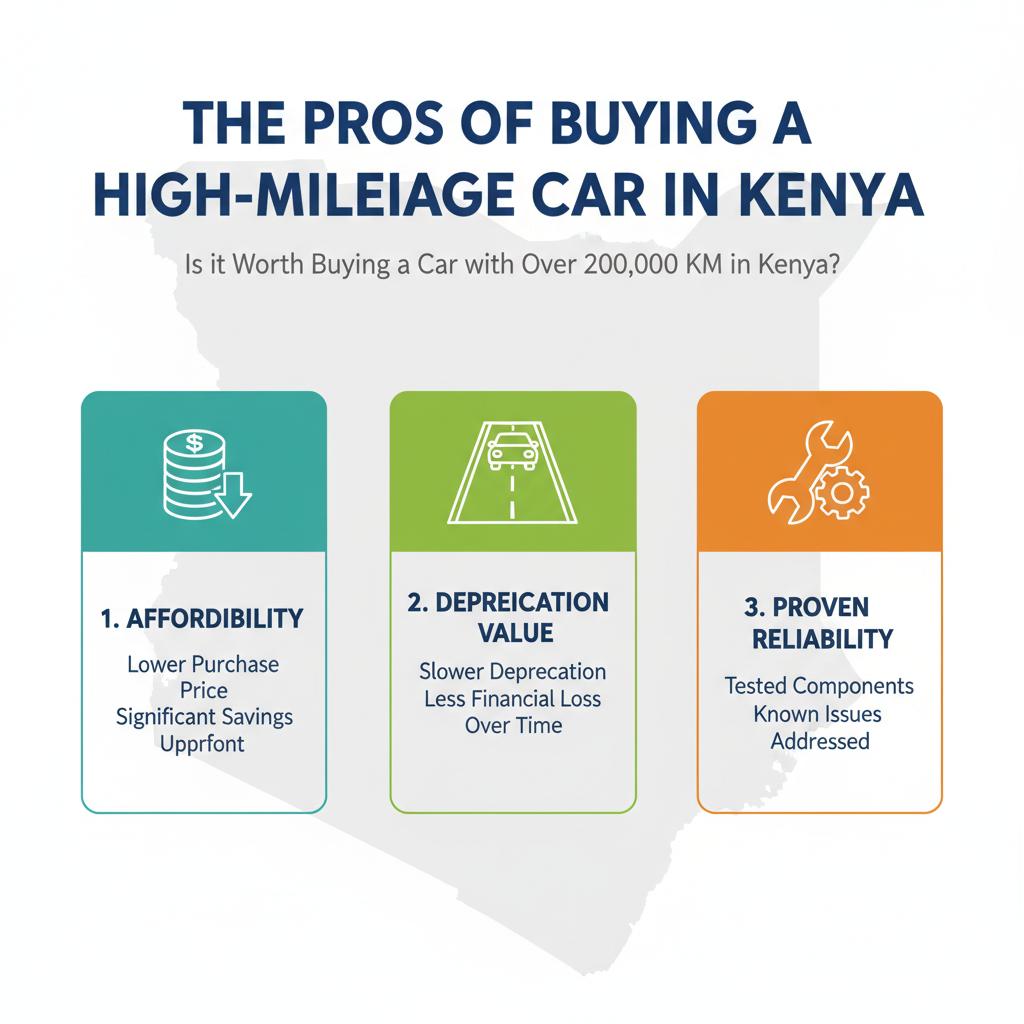
1. Significant Cost Savings
The most obvious advantage is the price. Vehicles with over 200,000 KM see a steep drop in resale value. You can often acquire a premium model (like a Toyota Prado or a Mitsubishi Pajero) for the price of a much smaller, newer hatchback. This allows buyers to access features and comfort levels that would otherwise be out of budget.
2. Lower Depreciation
Newer cars lose value the moment they leave the showroom. A car that has already clocked 200,000 KM has already undergone its steepest depreciation curve. If you maintain it well, you may be able to resell it two years later for a price very close to what you paid.
3. Proven Reliability
If a car has reached 200,000 KM and is still running smoothly, it is a testament to the build quality of that specific model. In Kenya’s used car market, certain “workhorses” are known to reach 400,000 KM with proper care.
The Risks and Challenges to Consider
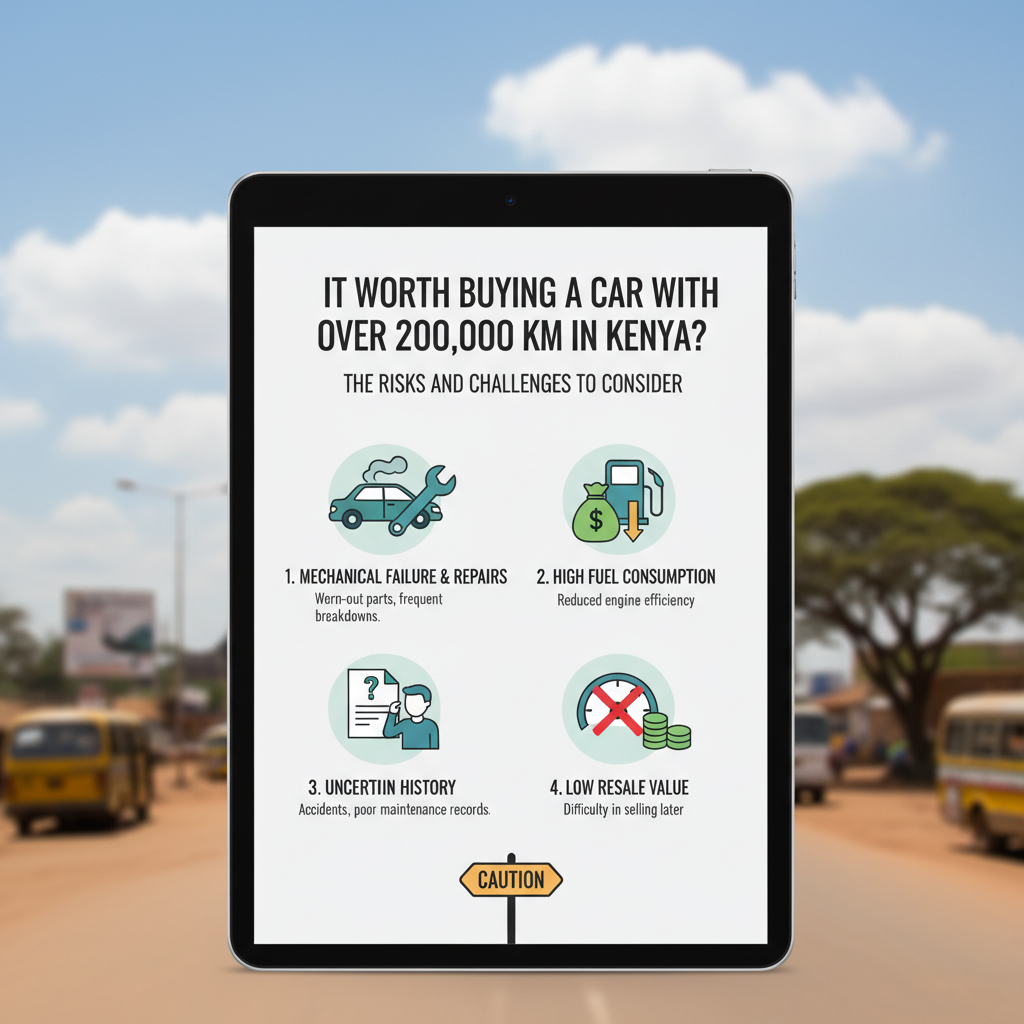
While the price is tempting, buying a car with over 200,000 KM in Kenya comes with inherent risks that cannot be ignored.
1. Increased Maintenance Frequency
At this stage in a vehicle’s life, major components are reaching the end of their engineered lifespan. You aren’t just looking at oil changes; you are looking at: Suspension overhauls (shocks, bushes, and ball joints). Replacement of cooling system components (radiators and water pumps). * Timing belt or chain replacements.
2. The “Hidden” History
In Kenya, maintenance records are rarely kept meticulously by private sellers. Unlike Japan, where “Shaken” inspections provide a paper trail, a locally used car with 200,000 KM may have skipped vital services or used counterfeit spare parts—a common issue in the local market.
3. Technology Obsolescence
Older high-mileage cars lack modern safety features like multiple airbags, electronic stability control, and advanced fuel-saving technologies. You may save money on the purchase but pay more at the petrol pump.
Key Components to Inspect Before Buying
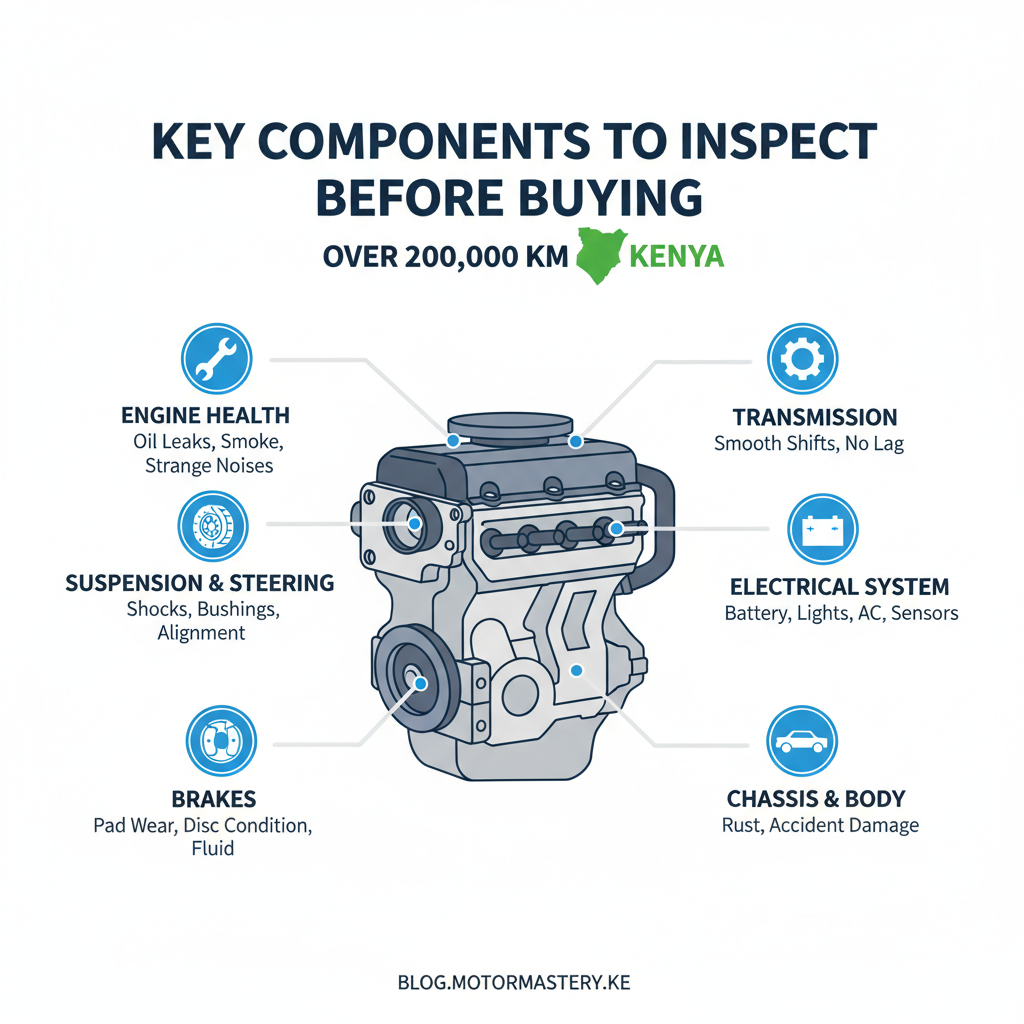
If you are considering a high-mileage vehicle, your inspection must be more rigorous than usual. Do not rely on the seller’s word; bring a trusted mechanic.
The Engine and Transmission
Check for “blow-by” (smoke coming out of the oil dipstick tube) which indicates worn piston rings. Listen for knocks or rattles during a cold start. For automatic transmissions, ensure the gear shifts are smooth; any hesitation or “hunting” for gears is a sign of an impending, expensive repair.
The Cooling System
Kenya’s tropical climate and heavy traffic (especially in Nairobi) put immense pressure on cooling systems. Check for signs of overheating or “brown mud” in the radiator, which suggests the owner used tap water instead of coolant, leading to internal corrosion.
The Suspension and Chassis
Given Kenya’s varying road conditions, the suspension takes a beating. Look for uneven tire wear, which suggests alignment issues or bent suspension arms. Inspect the chassis for signs of rust—especially if the car was previously used in coastal regions like Mombasa.
Which Brands Are Best for High Mileage in Kenya?
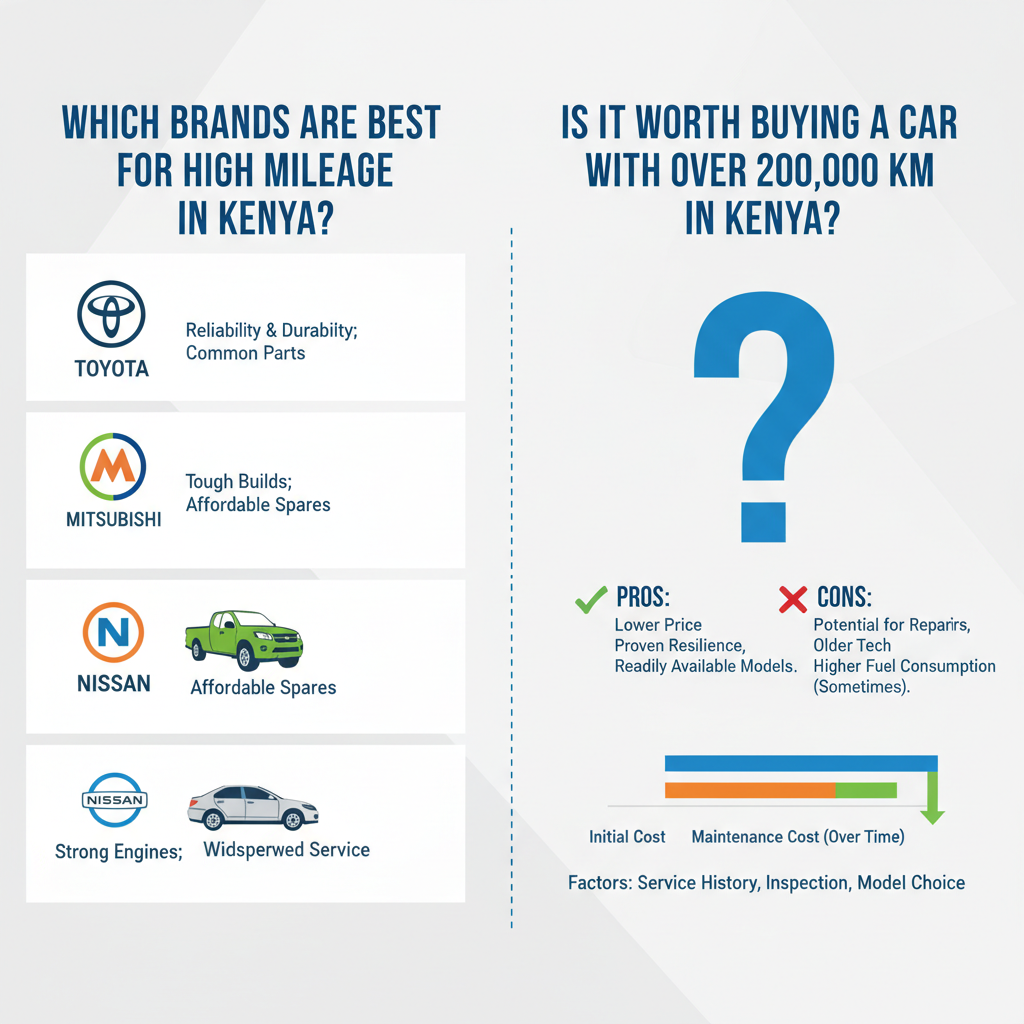
Not all cars are created equal when they hit the 200,000 KM mark. In Kenya, “Reliability” is synonymous with specific brands because of the availability of spare parts and mechanic expertise.
- Toyota: Models like the Fielder, Probox, Hilux, and Land Cruiser are the kings of high mileage. Parts are available in every town in Kenya, from Kirinyaga Road to remote outposts.
- Isuzu: Particularly for commercial use (pickups and trucks), Isuzu engines are built to endure high mileage.
- Subaru: While reliable, Subarus with over 200,000 KM require a more specialized touch and genuine parts, which can be pricier.
- Mitsubishi: The Pajero and L200 series are hardy, but ensure the cooling system has been well maintained.
Financial Considerations: Beyond the Purchase Price
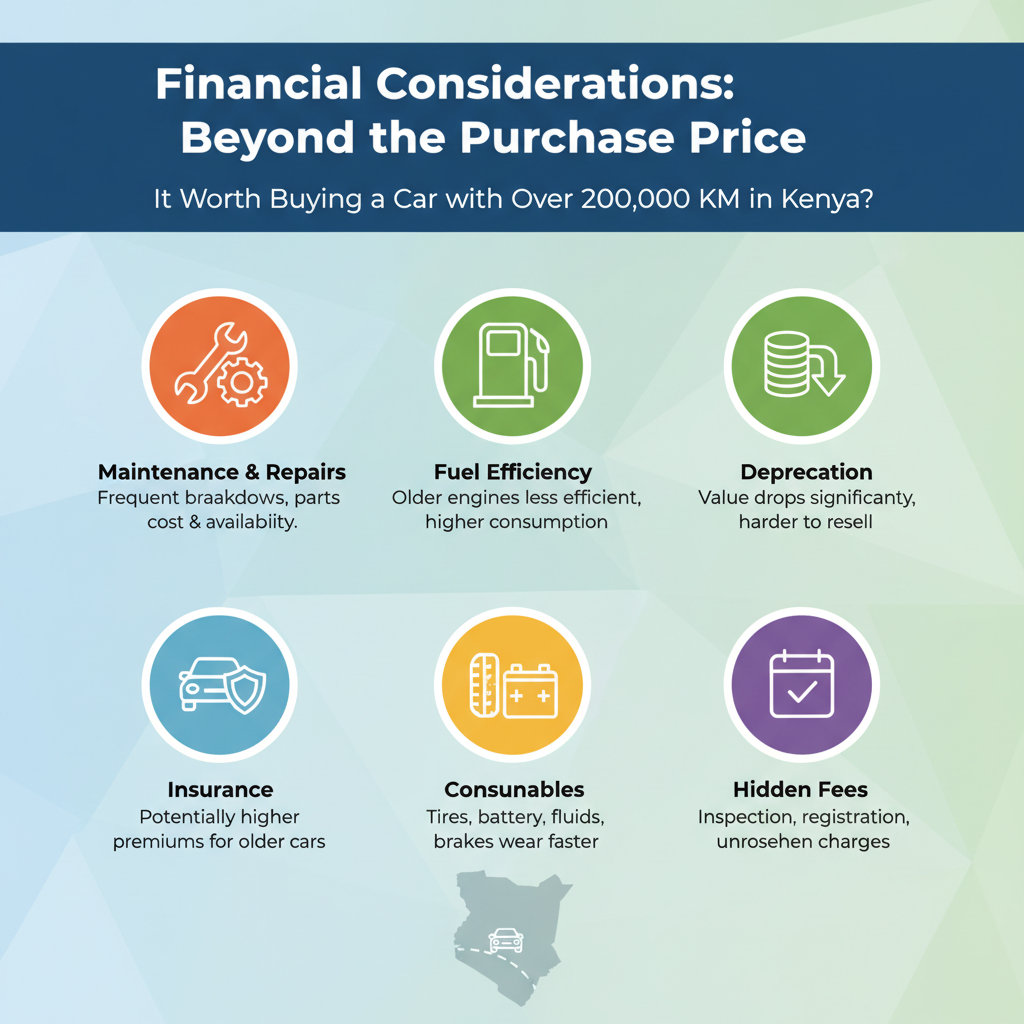
Is it worth buying a car with over 200,000 KM in Kenya when you consider the total cost of ownership?
Insurance
Most insurance companies in Kenya are hesitant to provide comprehensive cover for vehicles older than 15 years or with very high mileage. You might be restricted to “Third Party Only” (TPO) insurance, meaning you won’t be compensated if the car is stolen or damaged in an accident where you are at fault.
Financing
Getting a car loan for a high-mileage, older vehicle is nearly impossible in Kenya. Most SACCOs and banks have a cut-off age for collateral (usually 8–10 years). You will likely need to pay in cash.
Fuel Efficiency
As engines age, they become less efficient. Expect a car with 200,000 KM to consume slightly more fuel than its official rating, especially if the oxygen sensors or fuel injectors are dirty.
How to Protect Yourself During the Purchase
If you’ve decided to move forward, follow these steps to minimize your risk:
Verified Inspection: Use services like AA Kenya or specialized car inspection companies to get a comprehensive report. Check the Logbook: Ensure the VIN (Chassis number) on the car matches the logbook. Verify the ownership status on the NTSA TIMS (now eCitizen) portal to avoid buying stolen property or vehicles with unpaid logbook loans. * The Test Drive: Drive the car on both a smooth highway and a rough road. Turn off the radio and listen for any humming from the wheel bearings or vibrations in the steering wheel.
Conclusion: Is It Worth It?
So, is it worth buying a car with over 200,000 KM in Kenya?
Yes, if: You are buying a brand known for longevity (like Toyota). The price is significantly lower than lower-mileage alternatives. You have a “contingency fund” (at least 15% of the purchase price) set aside for immediate repairs. You need a rugged vehicle for utility rather than a status symbol.
No, if: You have no mechanical knowledge and don’t have a trustworthy mechanic. The car is a “European” brand (BMW, Mercedes, VW) that hasn’t been meticulously maintained, as parts and specialized labor will be prohibitively expensive. * You intend to use the vehicle for long-distance daily commuting without a backup plan.
Ultimately, a car with 200,000 KM isn’t necessarily at the end of its life—it’s just entering a new chapter. With the right inspection and a realistic budget for maintenance, a high-mileage vehicle can be a smart, economical way to get mobile in Kenya.
Frequently Asked Questions (FAQ)
1. Can I get a bank loan for a car with over 200,000 KM in Kenya?
Generally, no. Most Kenyan banks and microfinance institutions only finance vehicles that are less than 8 to 10 years old. High-mileage cars usually fall outside this bracket, meaning you will likely need to pay cash or use a personal unsecured loan.
2. What is the first thing I should do after buying a high-mileage car?
You should perform a “Major Service.” This includes changing the engine oil, transmission fluid, coolant, spark plugs, and all filters. It is also wise to replace the timing belt (if applicable) and inspect the braking system immediately.
3. Do high-mileage cars fail the NTSA inspection?
NTSA inspections for PSVs and commercial vehicles focus on safety (brakes, lights, tires, speed governors) and emissions. High mileage alone won’t make a car fail, but the wear and tear associated with it (like smoky exhaust or poor brakes) will.
4. Is it true that Toyotas are the only safe high-mileage bet in Kenya?
While Toyota has the best parts availability, other brands like Isuzu, Honda (e.g., CR-V), and certain Nissan models (with manual transmissions) are also very durable. The key in Kenya is how easily your local mechanic can find parts for that specific model.
5. How many more kilometers can I expect from a car with 200,000 KM?
With excellent maintenance, many Japanese engines can reach 350,000 to 500,000 KM. However, your experience will depend heavily on the previous owner’s habits and your willingness to invest in preventative maintenance.