
Toyota vs Nissan vs Mazda: Which Japanese Brand Lasts Longest in Kenya?
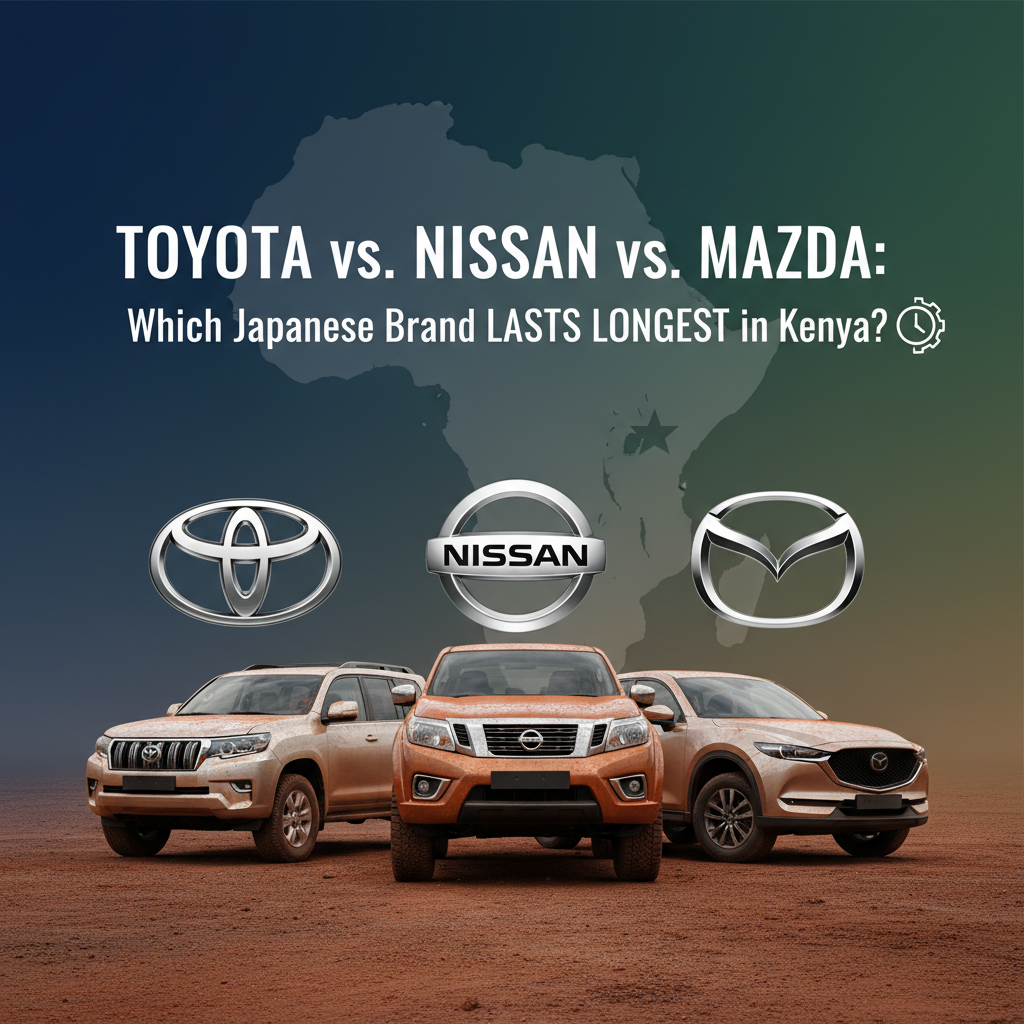
When walking through the bustling streets of Nairobi, navigating the highland turns of Kericho, or cruising the coastal roads of Mombasa, one thing is clear: Japanese vehicles dominate the Kenyan landscape. For decades, the “Big Three”—Toyota, Nissan, and Mazda—have battled for the hearts and wallets of Kenyan motorists.
Choosing a car in Kenya isn’t just about aesthetics or speed; it is about survival. Our unique driving conditions—ranging from heavy urban congestion to rugged, unpaved rural roads—demand vehicles that can go the distance. If you are planning to invest your hard-earned shillings, the ultimate question is: Which Japanese brand lasts longest in Kenya?
In this comprehensive guide, we will break down the reliability, maintenance, and long-term durability of Toyota, Nissan, and Mazda to help you make an informed decision.
1. Toyota: The King of Kenyan Roads
There is a common saying in the Kenyan automotive market: “You don’t buy a Toyota; you invest in one.” Toyota has built a legendary reputation for durability that borders on the mythical.
Why Toyotas Last So Long in Kenya
The primary reason Toyotas outlast many competitors in the local market is their simplicity and over-engineering. Older models like the Hilux, Land Cruiser, and the ubiquitous Probox were built with mechanical simplicity in mind, meaning there are fewer complex electronics to fail when exposed to dust and vibrations.
Parts Availability: You can find spare parts for a Toyota Corolla or Fielder in almost any town in Kenya, from Kakamega to Garissa. Mechanical Familiarity: Every mechanic in Kenya, regardless of their training level, knows how to service a Toyota engine. * Resale Value: Because they last so long, Toyotas hold their value better than any other brand. A 10-year-old Toyota often sells for the same price as a 5-year-old European car.
Common Longevity Champions
Toyota Land Cruiser (70 Series & V8): Often referred to as “the king of the bush.” Toyota Hilux: The ultimate workhorse for Kenyan agriculture and construction. * Toyota Corolla/Fielder/Axio: The gold standard for fuel-efficient longevity.
2. Nissan: The Great Improver
Historically, Nissan has had a rollercoaster relationship with Kenyan drivers. While the brand was once the go-to for tough Datsun pickups, it faced a reputation dip in the 2000s due to cooling system issues and fragile CVT gearboxes in models like the X-Trail (T30/T31).
The Modern Nissan Resilience
However, Nissan has staged a massive comeback. Modern Nissans, particularly the newer X-Trail (T32) and the Navara, have addressed previous cooling issues.
Suspension Strength: Nissan vehicles generally offer more “supple” suspension than early Toyotas, making them comfortable for long-distance travel on the Nairobi-Mombasa highway. Improved Transmissions: While early CVTs gave Nissan a bad name, the newer generations are significantly more robust, provided they are serviced with the correct “NS-3” fluid. * Engine Durability: Nissan engines, particularly the QR and HR series, are known to reach 300,000km easily if regular oil changes are performed.
Best Nissans for Long-Term Ownership
Nissan Navara (NP300): A strong rival to the Hilux with superior comfort. Nissan X-Trail: Great for family use, provided you maintain the cooling system. * Nissan Note/Tiida: Surprising longevity in the hatchback category.
3. Mazda: The Style and Performance Contender
Mazda has transitioned from being “just another Japanese brand” to a premium alternative. In Kenya, Mazda has seen a surge in popularity over the last decade, led by the CX-5 and the Demio.
Can a Mazda Survive the Kenyan Terrain?
Mazda’s “SkyActiv” technology focuses on high compression and efficiency. While this makes them incredibly fun to drive and fuel-efficient, it also means they are sensitive.
Fuel Sensitivity: Mazda’s high-tech engines require high-quality fuel. Using contaminated or low-octane fuel can lead to carbon buildup and injector issues faster than in a Toyota. The Diesel Dilemma: Many imported Mazda CX-5s come with the 2.2L SkyActiv-D engine. While powerful, these have faced “head gasket” and “oil dilution” issues in the Kenyan climate if not meticulously maintained. * Build Quality: In terms of interior longevity, Mazda often beats Toyota and Nissan. The cabins use higher-quality materials that don’t rattle as much after years of driving on bumpy roads.
Mazda Longevity Picks
Mazda CX-5 (Petrol): The 2.0L and 2.5L petrol versions are remarkably reliable. Mazda Demio: One of the longest-lasting small cars on the market. * Mazda Axela/3: A solid sedan that rivals the Toyota Corolla in build quality.
Comparative Analysis: The Reliability Scorecard
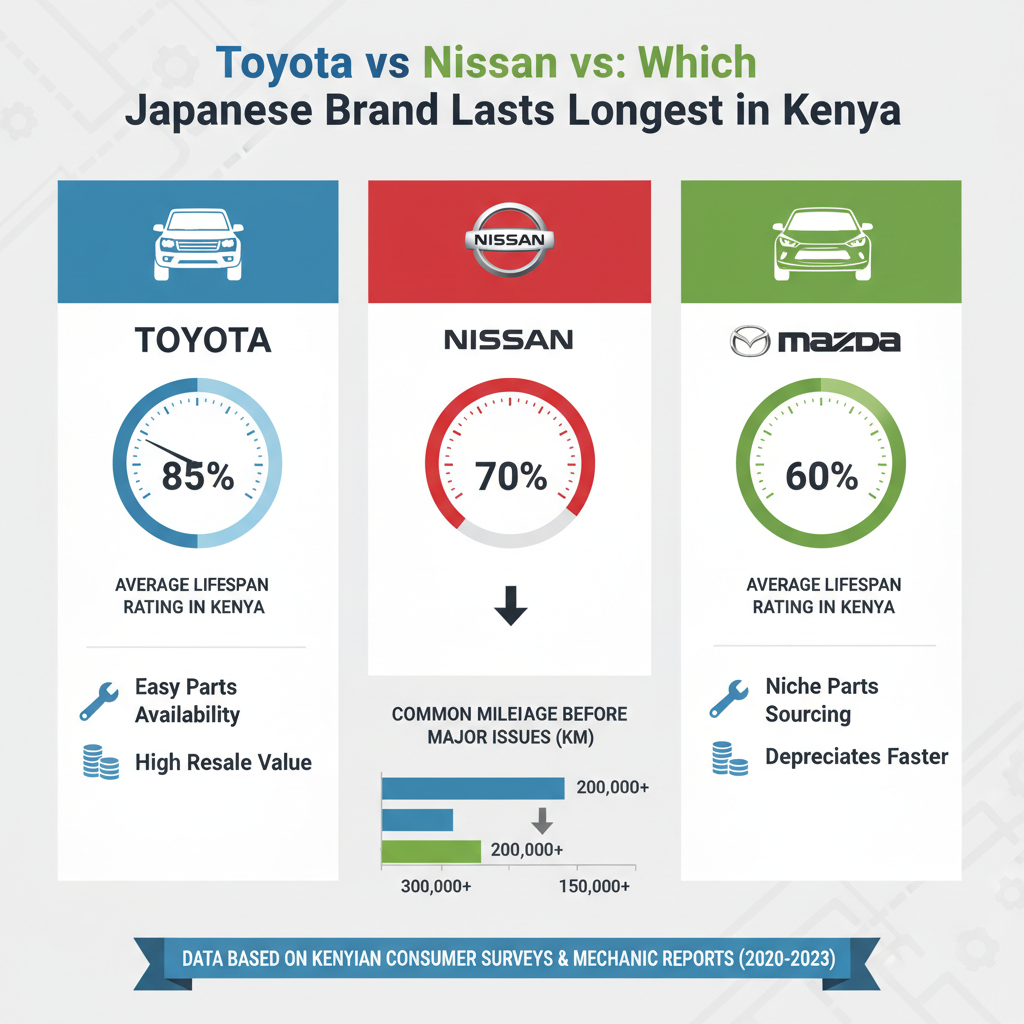
To determine which brand lasts longest, we must look at four critical pillars:
A. Engine and Transmission (The Powertrain)
Toyota: Leads the pack. Their naturally aspirated engines and traditional torque-converter automatics are nearly “bulletproof.” Nissan: Solid engines, but the CVT (Continuously Variable Transmission) remains a weak point if the owner skips maintenance. * Mazda: Excellent petrol engines, but the diesel variants require a level of maintenance that the average Kenyan driver might find taxing.
B. Suspension and Chassis
Toyota: Built “stiff.” While not the most comfortable, they survive potholes for years without needing new bushings. Nissan: Very comfortable, but you might find yourself replacing shocks and bushes more frequently than a Toyota owner. * Mazda: Precision handling, but the low ground clearance on models like the Mazda 3 makes them susceptible to undercarriage damage on Kenyan rural roads.
C. Spare Parts and Serviceability
Toyota: Wins hands down. Parts are available in every “duka” (shop) in the country. Nissan: Good availability in major towns, though some sensors can be expensive. * Mazda: Parts are becoming more available, but they remain the most expensive of the three. You often have to wait for specialized parts to be imported from Dubai or Japan.
The Verdict: Which Brand Lasts Longest?
If “lasting longest” is defined by minimal maintenance, high mileage (300,000km+), and the ability to survive neglect, the winner is Toyota.
However, the competition is closer than you think:
- Toyota is for the driver who wants a “buy and forget” vehicle. It is the best for rural areas and high-mileage commercial use.
- Nissan is the middle ground. It offers more comfort and modern tech than Toyota at a lower entry price, making it a great choice for urban commuters who follow a strict service schedule.
- Mazda is for the enthusiast. A Mazda will last a very long time, but only if you provide it with “TLC” (Tender Loving Care), high-quality lubricants, and premium fuel. It is the premium choice for the Nairobi professional.
5 Practical Tips to Make Your Japanese Car Last 20 Years in Kenya
Regardless of whether you choose Toyota, Nissan, or Mazda, the “Kenyan condition” requires a specific maintenance approach:
- Shorten Your Service Intervals: The dust in Kenya is abrasive. Even if your manual says every 10,000km, consider changing your air and oil filters every 5,000km to 7,500km.
- Invest in Good Tyres: Kenyan roads can get very hot. Cheap tyres perish and blow out. High-quality AT (All-Terrain) tyres are better for the mixed conditions of our roads.
- Undercoat Your Vehicle: If you live in Mombasa or coastal regions, the salty air causes rust. Undercoating is essential to keep the chassis from rotting.
- Avoid “Jua Kali” Sensors: For modern Nissans and Mazdas, never use counterfeit sensors. Always buy Genuine OEM (Original Equipment Manufacturer) parts to avoid damaging the ECU.
- Watch Your Cooling System: Overheating is the #1 killer of Japanese engines in Kenya. Frequently check your coolant levels and ensure your radiator is not clogged with grass or mud.
Conclusion
In the battle of Toyota vs Nissan vs Mazda, Toyota remains the longevity champion in Kenya due to its unmatched parts ecosystem and mechanical simplicity. However, Nissan offers better value for money, and Mazda offers a superior driving experience.
If you are buying a car to keep for the next 15 years, go for a Toyota. If you want a modern, comfortable SUV and are willing to be diligent with maintenance, a Nissan X-Trail or Mazda CX-5 will serve you exceptionally well.
Frequently Asked Questions (FAQs)
1. Is it true that Nissan gearboxes are bad?
Older Nissan CVT gearboxes (early 2000s) had issues with overheating. However, modern Nissans are much more reliable. The key is to change the CVT fluid every 40,000km and avoid aggressive towing.
2. Which brand has the best fuel economy?
In the hatchback category, the Toyota Vitz and Mazda Demio are neck-and-neck. In the SUV category, Mazda’s SkyActiv-G petrol engines are often more efficient than Toyota’s older engine designs.
3. Why are Toyotas so expensive in Kenya?
It comes down to demand and supply. Because Toyotas are known to last and are easy to repair, everyone wants one. This high demand keeps the resale value high, making them more expensive as second-hand purchases.
4. Which Mazda CX-5 should I buy: Petrol or Diesel?
For the Kenyan market, the Petrol (2.0L or 2.5L) version is generally recommended for longevity. The Diesel version is powerful but requires very high-quality low-sulfur diesel and specialized maintenance that can be hard to find outside Nairobi.
5. Can I use a Mazda for “shamba” (farm) trips?
While you can, Mazdas generally have lower ground clearance and softer suspension compared to Toyotas. If your farm involves very rough terrain, a Toyota Hilux or a Nissan Navara is a better, more durable choice.